
Citrus Pulp CAS: 94266-47-4
Citrus Pulp CAS: 94266-47-4

In campanha for chemical procurement, real‑time geopolitical intelligence outpaces traditional weekly updates, protecting margins against volatile energy policies. By tracking policy shifts instantly, buyers secure stable pricing and smarter purchasing decisions. This article explains why legacy reports fail in today’s fast‑moving supply chain.

The 60-day diplomatic window following the June 2026 MoU is becoming a key milestone for green ammonia investments. Developers and industrial buyers are closely monitoring project timelines, supply security, and future procurement opportunities.

Methanol buyers are facing a critical Q3 planning challenge as Strait of Hormuz transit remains far below normal levels. Physical shipping data now matters more than diplomatic signals when assessing supply availability and pricing risk.
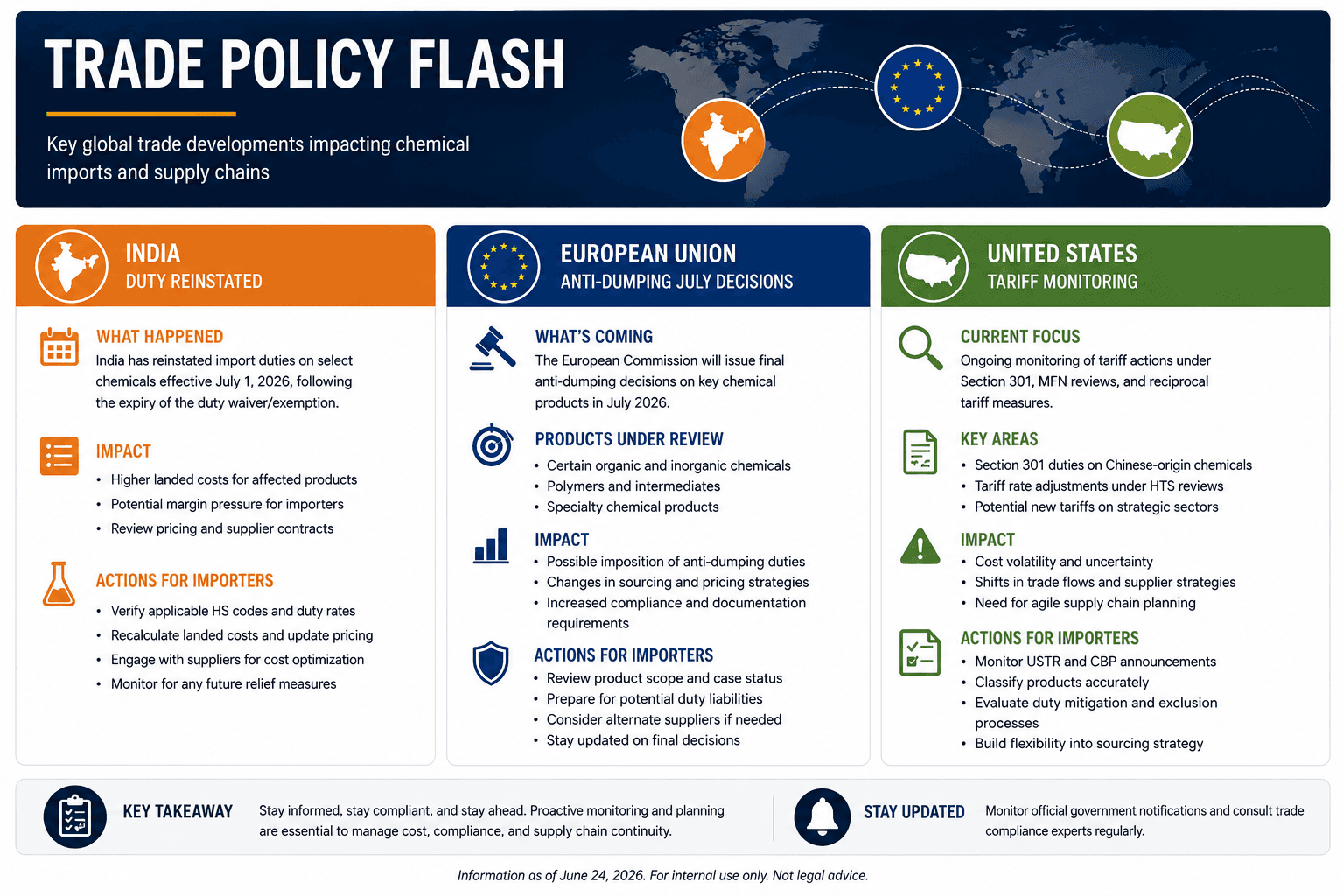
July 1 brings major trade policy changes for chemical buyers: India’s duty waiver has ended, EU anti-dumping decisions on Chinese chemicals are nearing publication, and US tariff rules remain active. Procurement teams should immediately reprice H2 sourcing assumptions.

The 2026 Hormuz crisis transformed chemical procurement into an intelligence-driven function. Platforms like ICIS, Kpler, Xeneta, and ChemAnalyst are now essential tools helping procurement teams track prices, shipping disruption, freight rates, and supply risk in real time.

The polyethylene market enters a new competitive phase as Gulf producers restore exports to Asia following recent shipping disruptions. Procurement teams now face changing freight economics, narrowing cost advantages and new sourcing decisions that could reshape polyethylene trade through the second half of 2026.
We're committed to your privacy. Tradeasia uses the information you provide to us to contact you about our relevant content, products, and services. For more information, check out our privacy policy.