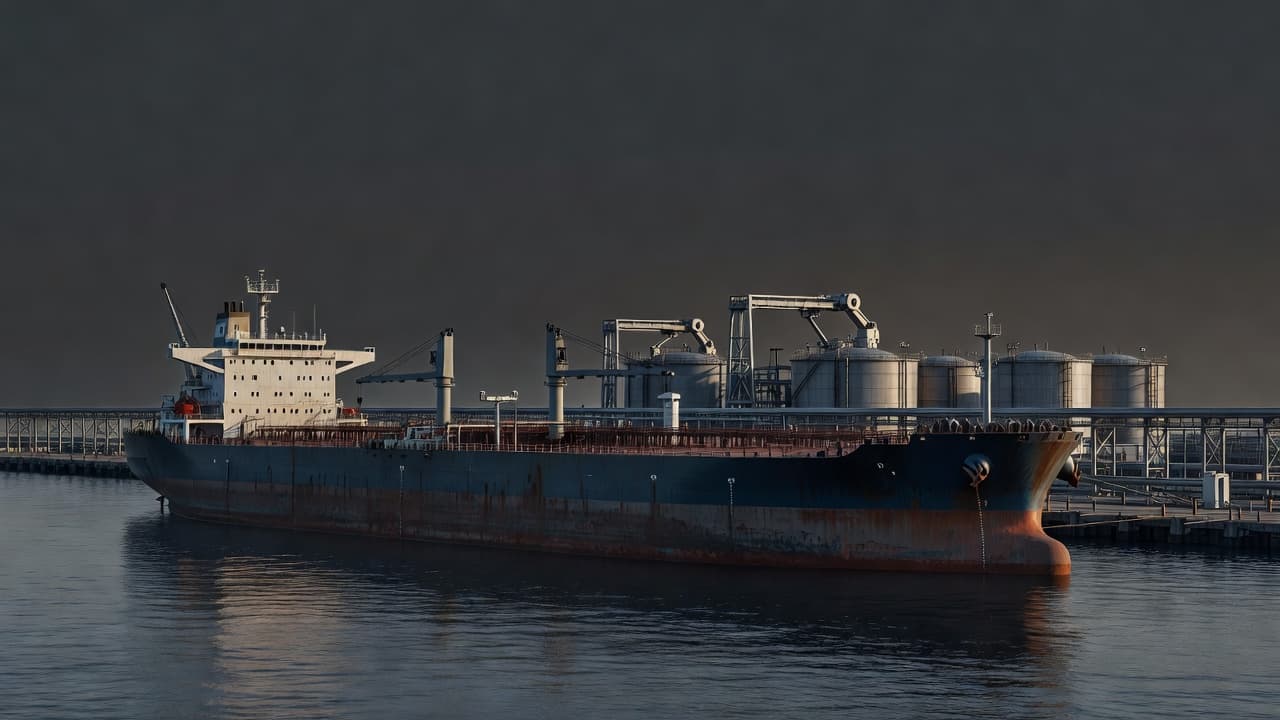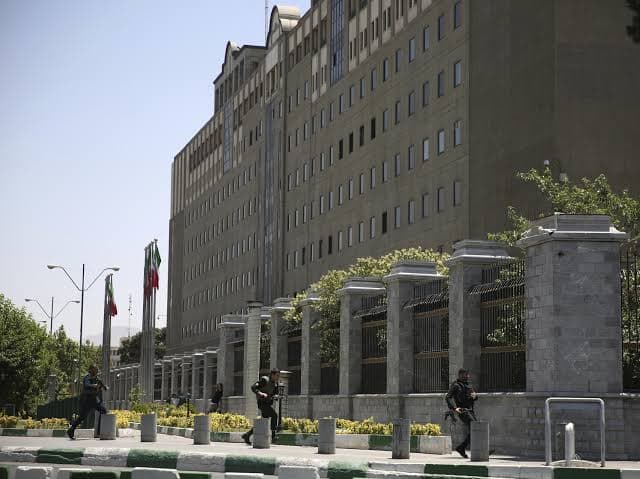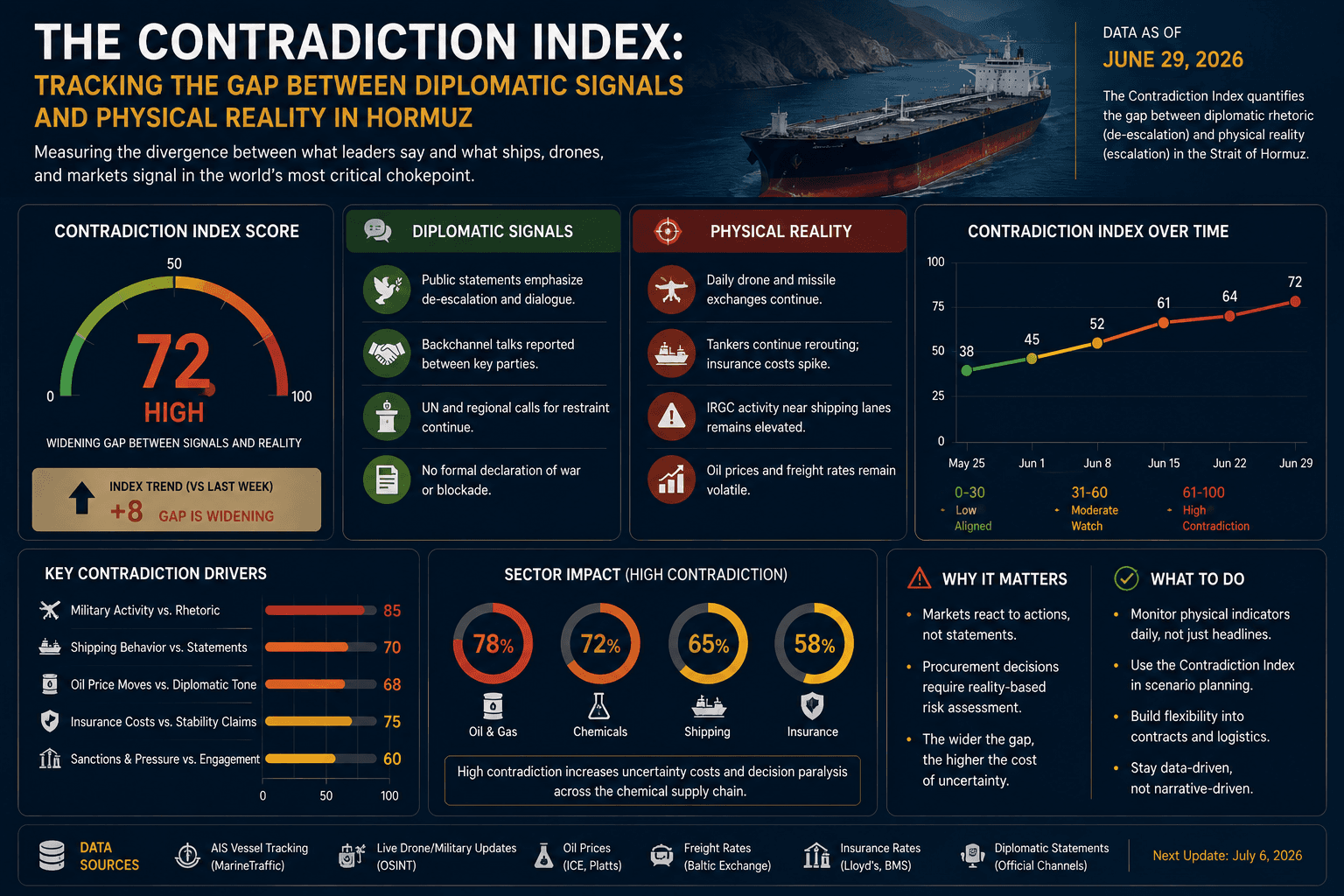
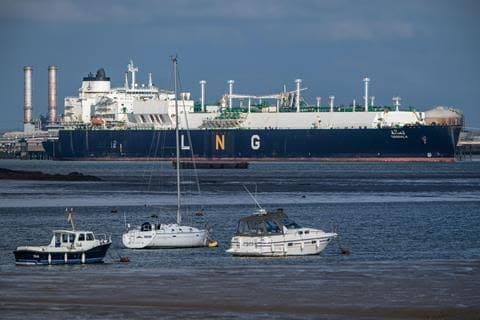
For chemical shipping executives, logistics managers and freight planners, the most important development from the recent diplomatic discussions is not a headline political agreement.
It is the creation of a practical operational mechanism designed to reduce the risk of incidents at sea.
The newly established de-confliction channel between US and Iranian representatives represents the most significant shipping safety improvement since the Hormuz disruption began earlier this year.
Combined with expanded multinational maritime cooperation, the initiative is beginning to change how shipping companies assess risk in one of the world's most strategically important waterways.
The key message for chemical cargo operators is clear:
Conditions are improving, but normality has not yet returned.
Why the De-Confliction Channel Matters
One of the greatest risks during any geopolitical crisis is miscalculation.
Even when parties are not actively seeking confrontation, misunderstandings can quickly escalate into incidents affecting commercial shipping.
A direct communication mechanism helps reduce that risk by providing:
Faster communication
Incident clarification
Operational coordination
Crisis management support
Navigation safety improvements
For shipowners and cargo interests, this is often more important than political rhetoric.
Practical communication channels reduce uncertainty.
Hormuz Remains a Critical Chemical Trade Route
The Strait of Hormuz continues to serve as one of the world's most important maritime corridors.
Major cargoes moving through the Strait include:
Methanol
Polyethylene (PE)
Polypropylene (PP)
Ammonia
Urea
LPG
LNG
Aromatics
A disruption affecting Hormuz can rapidly influence:
Freight rates
Chemical pricing
Insurance premiums
Inventory strategies
Global trade flows
This is why operational improvements attract such close attention from chemical markets.
Record Traffic Signals Growing Confidence
Recent vessel transit volumes suggest that confidence is gradually returning.
Higher traffic levels indicate:
Increased shipowner willingness to transit
Greater insurer confidence
Improved operational coordination
Reduced immediate security concerns
While traffic alone does not guarantee long-term stability, it provides an important indicator that shipping activity is recovering.
For freight markets, perception often influences behavior as much as actual risk.

Denmark's Entry Strengthens Maritime Security
Another important development is the expansion of multinational participation in maritime security efforts.
Additional coalition support contributes to:
Enhanced surveillance
Greater operational coverage
Improved incident response capability
Stronger deterrence
For commercial shipping operators, broader international participation generally improves confidence in transit safety.
This does not eliminate risk.
However, it reduces uncertainty surrounding maritime operations.
Why War Risk Insurance Remains Important
Despite improving conditions, war risk insurance remains a critical consideration.
Many chemical cargoes continue to move under policies that were revised during the crisis period.
Importers and exporters should verify:
Current Premium Levels
Some insurers may begin adjusting rates.
Coverage Scope
Confirm that actual routes remain covered.
Policy Conditions
Review exclusions and special provisions.
Transit Requirements
Some policies may contain operational requirements tied to route selection.
Small policy changes can materially affect shipment economics.
Chemical Shippers Should Not Assume Immediate Savings
One common mistake after security improvements is assuming insurance costs will fall immediately.
In practice, insurers typically wait for evidence of sustained stability.
Factors influencing premium reductions include:
Incident frequency
Vessel traffic levels
Security assessments
Government advisories
Claims history
As a result, premium reductions often lag improvements in the security environment.
Companies should therefore seek direct confirmation rather than relying on assumptions.
Operational Checklist for Q3 Shipping Programs
Chemical logistics managers should use the current period to update shipping strategies.
Contact Insurance Brokers
Confirm whether policy pricing or coverage conditions have changed.
Review Carrier Advisories
Shipping lines may update route guidance and transit procedures.
Update Internal Risk Assessments
Adjust risk models to reflect improving—but not fully normalized—conditions.
Validate Freight Contracts
Ensure contractual assumptions remain current.
Maintain Contingency Plans
Alternative routing and inventory strategies should remain available.
Organizations that update procedures early will be better positioned for Q3 operations.
Why Hormuz Is Still Not Fully Normalized
Although progress is encouraging, several challenges remain.
These include:
Mine clearance activities
Vessel backlog recovery
Insurance market caution
Transit fee negotiations
Regional political uncertainty
Each factor continues to influence shipping decisions.
Consequently, risk levels remain lower than during the peak crisis period but higher than historical norms.
What Chemical Buyers Should Watch
Several indicators will reveal whether conditions continue improving.
War Risk Premium Trends
One of the clearest indicators of insurer confidence.
Vessel Transit Volumes
Higher traffic supports market normalization.
Freight Rate Movements
Transportation costs often reflect changing risk perceptions.
Security Advisories
Official guidance remains important.
Carrier Routing Decisions
Shipping companies frequently act before broader market sentiment changes.
Monitoring these indicators provides a practical view of market conditions.
Methanol CAS: 67-56-1