
Every chemical procurement professional talks about supply chain resilience today. Yet most of the industry's best practices were not developed in boardrooms or consulting workshops. They were learned through crises.
Over the past fifteen years, a series of disruptions exposed weaknesses in global chemical supply chains and fundamentally changed how companies think about sourcing, inventory management and supplier risk.
Some disruptions lasted days. Others lasted months. A few changed procurement strategy permanently.
As companies navigate the challenges of 2026, these five historical failures offer valuable lessons that remain highly relevant.
Why Supply Chain Failures Matter More Than Ever
The chemical industry operates through deeply interconnected value chains.
A disruption affecting:
Feedstocks.
Logistics.
Energy.
Manufacturing.
Transportation.
can rapidly spread across multiple continents and industries.
The most successful procurement organizations no longer ask whether disruption will occur.
Instead, they ask:
"How prepared are we when it happens?"
The following five events helped answer that question.
1. The 2011 Thailand Floods
The Thailand floods of 2011 remain one of the most important examples of geographic concentration risk.
Flooding affected major industrial zones that produced critical components and specialty chemicals used throughout electronics manufacturing.
Consequences included:
Severe hard drive shortages.
Electronic chemical supply disruptions.
Extended production delays.
Global inventory shortages.
The impact lasted for more than a year in some sectors.
Key Lesson
Never assume that a single manufacturing region is immune to disruption.
Procurement teams learned the importance of:
Geographic supplier diversification.
Regional risk assessments.
Secondary sourcing strategies.
The event demonstrated that natural disasters can create global consequences when supply chains become overly concentrated.
2. The 2019 Jubail Ethane Shortage
Feedstock shortages can be just as disruptive as plant shutdowns.
In 2019, allocation reductions affecting ethane supplies in Saudi Arabia created challenges for downstream petrochemical producers.
The shortage affected facilities linked to major industrial operations and highlighted the vulnerability of integrated petrochemical value chains.
Impacts included:
Reduced feedstock availability.
Production constraints.
Supply uncertainty.
Downstream market disruptions.
Key Lesson
Feedstock security matters as much as manufacturing capacity.
A supplier may own world-scale production facilities, but if critical feedstocks become constrained, production can still be affected.
Procurement teams increasingly began evaluating upstream supply risks alongside supplier capabilities.

3. The 2021 Texas Freeze
The Texas winter storm of 2021 became one of the most disruptive events in modern petrochemical history.
Extreme weather caused widespread shutdowns across the US Gulf Coast, one of the world's most important chemical production hubs.
Affected products included:
Monoethylene glycol (MEG).
Polyethylene.
Polypropylene.
Olefins.
Numerous specialty chemicals.
Because so much global production capacity is concentrated along the Gulf Coast, the effects quickly spread worldwide.
Key Lesson
Concentration risk is not limited to suppliers.
It also applies to manufacturing regions.
Many companies responded by:
Expanding regional sourcing options.
Increasing safety stock levels.
Reviewing force majeure exposure.
The event reinforced the value of supply chain redundancy.
4. The Ever Given and the Suez Canal Blockage
In March 2021, the container vessel Ever Given blocked the Suez Canal for six days.
The disruption was relatively short, but its significance was enormous.
The incident revealed how dependent global trade had become on a handful of transportation chokepoints.
Consequences included:
Shipping delays.
Freight rate increases.
Inventory shortages.
Supply chain uncertainty.
The blockage affected industries far beyond chemicals.
Key Lesson
Logistics diversification is as important as supplier diversification.
Companies learned to evaluate:
Alternative shipping routes.
Regional warehousing.
Transit-time risk.
Freight contingency planning.
The event highlighted how a single vessel could disrupt global commerce.
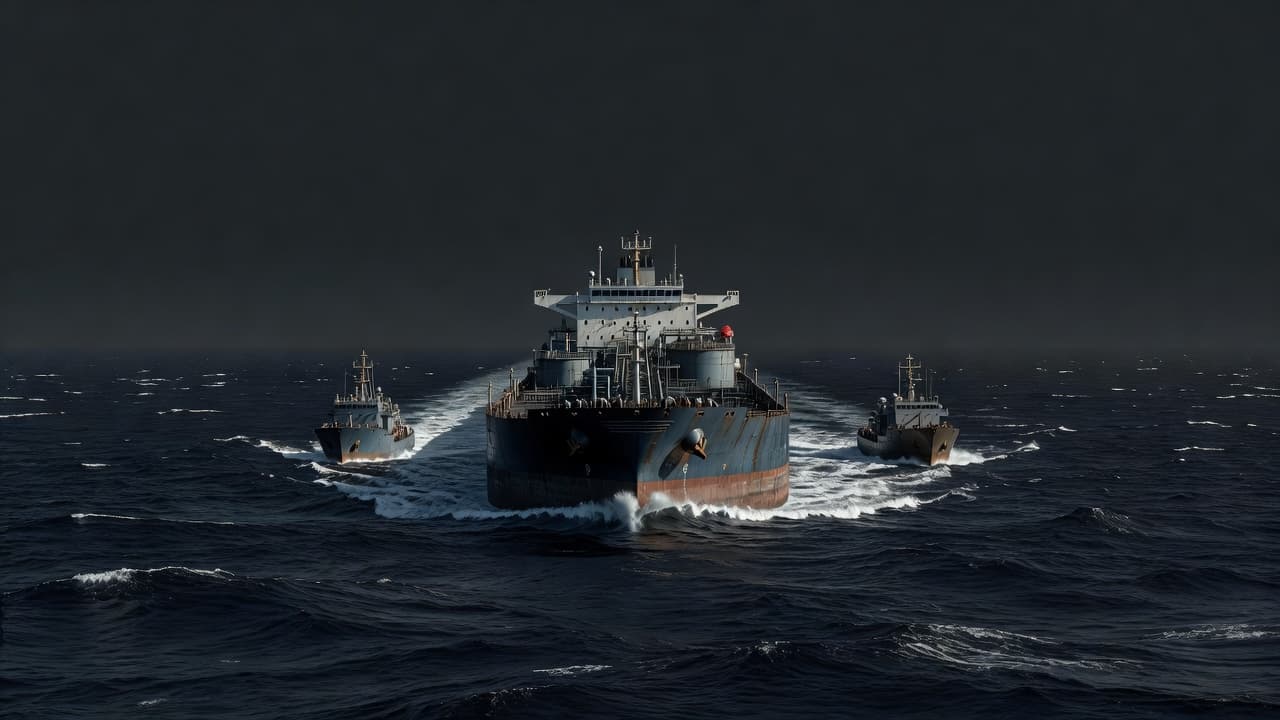
5. The 2026 Strait of Hormuz Crisis
The most significant chemical supply disruption of the modern era may be unfolding right now.
The Strait of Hormuz remains one of the world's most critical trade corridors for:
Crude oil.
Naphtha.
Methanol.
Urea.
Petrochemical feedstocks.
Disruptions during 2026 affected approximately 20% of global oil trade and a similarly important share of chemical feedstock movements.
The consequences have included:
Feedstock inflation.
Freight surcharges.
Contract shortages.
Supply insecurity.
Global chemical price volatility.
Unlike previous events, the Hormuz disruption combines geopolitical, energy and logistics risks simultaneously.
Key Lesson
Procurement resilience requires multiple layers of protection.
No single strategy is sufficient.
Organizations need:
Supplier diversification.
Strategic inventory.
Long-term contracts.
Logistics flexibility.
Continuous market intelligence.
The companies best prepared for 2026 were often those that applied lessons learned from previous disruptions.
The Three Lessons Every Procurement Team Should Remember
Although each crisis was different, the same themes repeatedly emerged.
1. Diversify Suppliers Before You Need Them
Alternative suppliers cannot be qualified overnight.
The best time to establish backup supply sources is before disruption occurs.
2. Strategic Inventory Is Not Waste
For years, lean inventory strategies dominated procurement thinking.
Recent events have demonstrated that carefully managed safety stock can provide significant protection against market shocks.
3. Contracts Matter During Crises
Spot markets often function efficiently during stable periods.
During disruptions, however, long-term contracts frequently become one of the most valuable assets a procurement team possesses.
Building a More Resilient Supply Chain for 2030
The future will likely include additional disruptions.
Potential risks include:
Climate-related events.
Geopolitical conflicts.
Energy shortages.
Trade restrictions.
Infrastructure bottlenecks.
The goal is not to predict every disruption.
The goal is to build systems capable of absorbing them.
Companies that combine diversified sourcing, strategic inventory management and strong supplier relationships will be better positioned to withstand future shocks.
The Bottom Line
The Thailand floods, Jubail feedstock shortages, Texas freeze, Ever Given blockage and Hormuz crisis all delivered the same message in different ways: efficiency without resilience creates vulnerability.
Each event exposed a different weakness in global supply chains, but together they created a blueprint for modern procurement strategy. Supplier diversification, inventory planning, logistics flexibility and contract management are no longer optional best practices—they are essential risk-management tools.
For procurement teams in 2026, the most valuable lesson is simple: disruptions are inevitable. The competitive advantage belongs to organizations that prepare for them before they occur.
Looking to strengthen your chemical sourcing strategy? Connect with verified suppliers and procurement experts on our platform today.
Monoethylene glycol CAS: 107-21-1