
Mono Propylene Glycol (E1520) CAS: 57-55-6
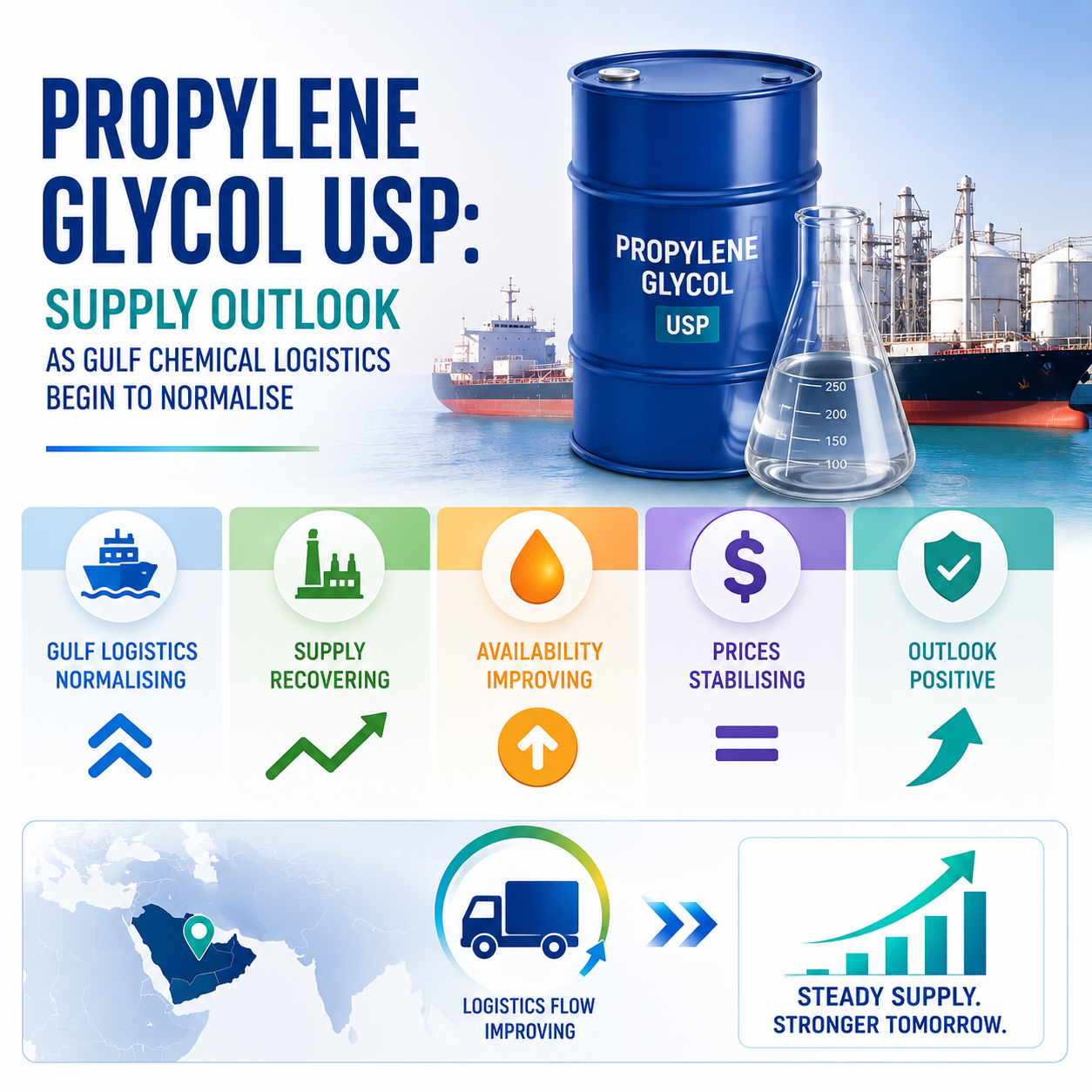
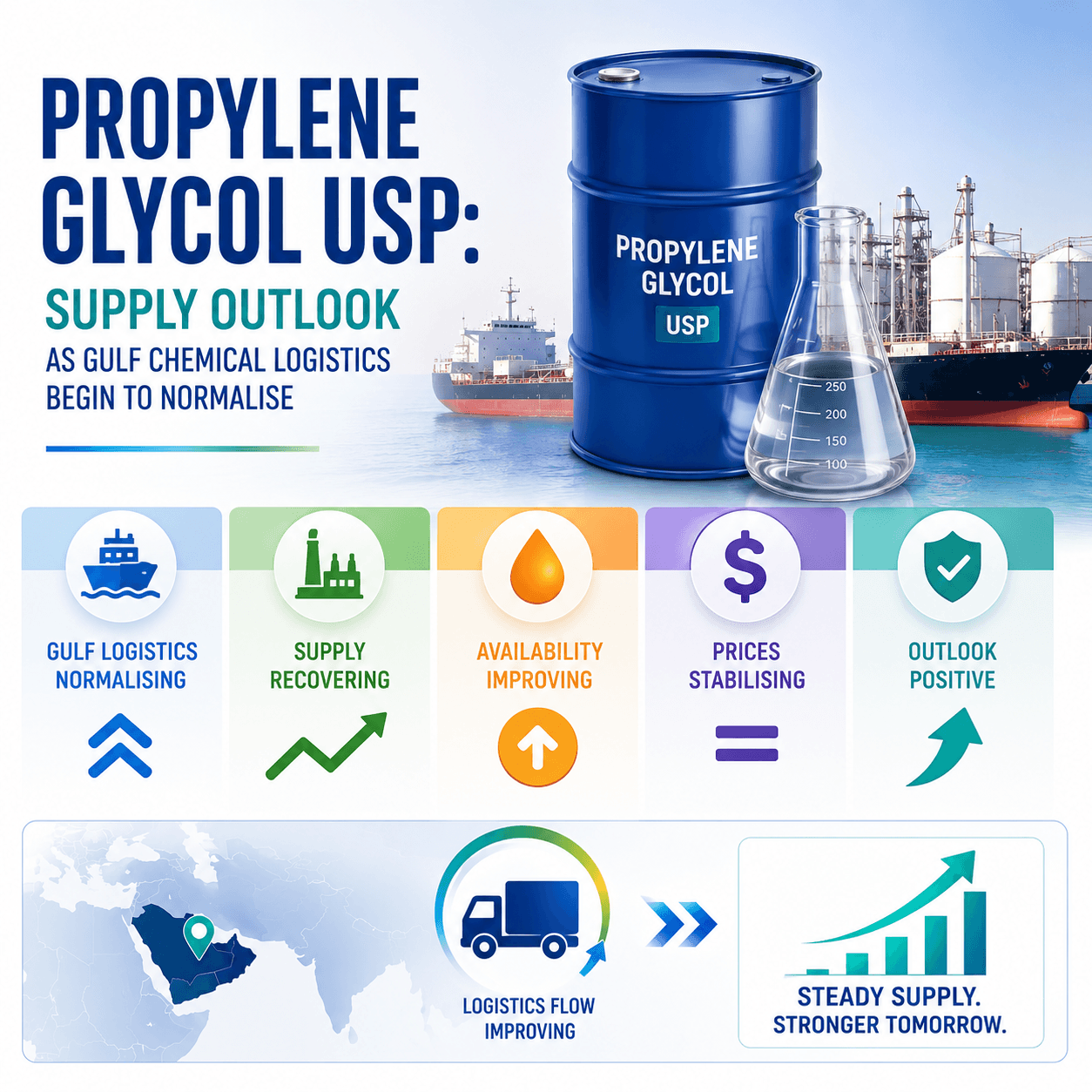
Mono Propylene Glycol (E1520) CAS: 57-55-6
Recent geopolitical developments have renewed attention on PCS Singapore's force majeure position and its implications for regional petrochemical supply. Buyers of polyethylene, polypropylene and ethylene derivatives should reassess supplier communication and supply chain contingency plans.

The IMF's April 2026 Regional Economic Outlook highlights the strategic importance of the Strait of Hormuz to global oil, helium, sulfur, ammonia and petrochemical feedstock flows. Chemical procurement teams can use this multilateral data to strengthen supply chain risk assessments and executive decision making.
Tropical Storm Arthur is disrupting operations across the US Gulf Coast chemical corridor, affecting ports, rail networks and petrochemical facilities. While the storm is not expected to become a major hurricane, buyers should prepare for temporary logistics delays and closely monitor July shipment schedules.

Ammonia availability in Q3 2026 is rebounding, shifting power back to sellers. Indian buyers, once dominant in phosphoric acid pricing, now face tighter margins and less bargaining room. Learn how supply dynamics reshape fertilizer procurement strategies.
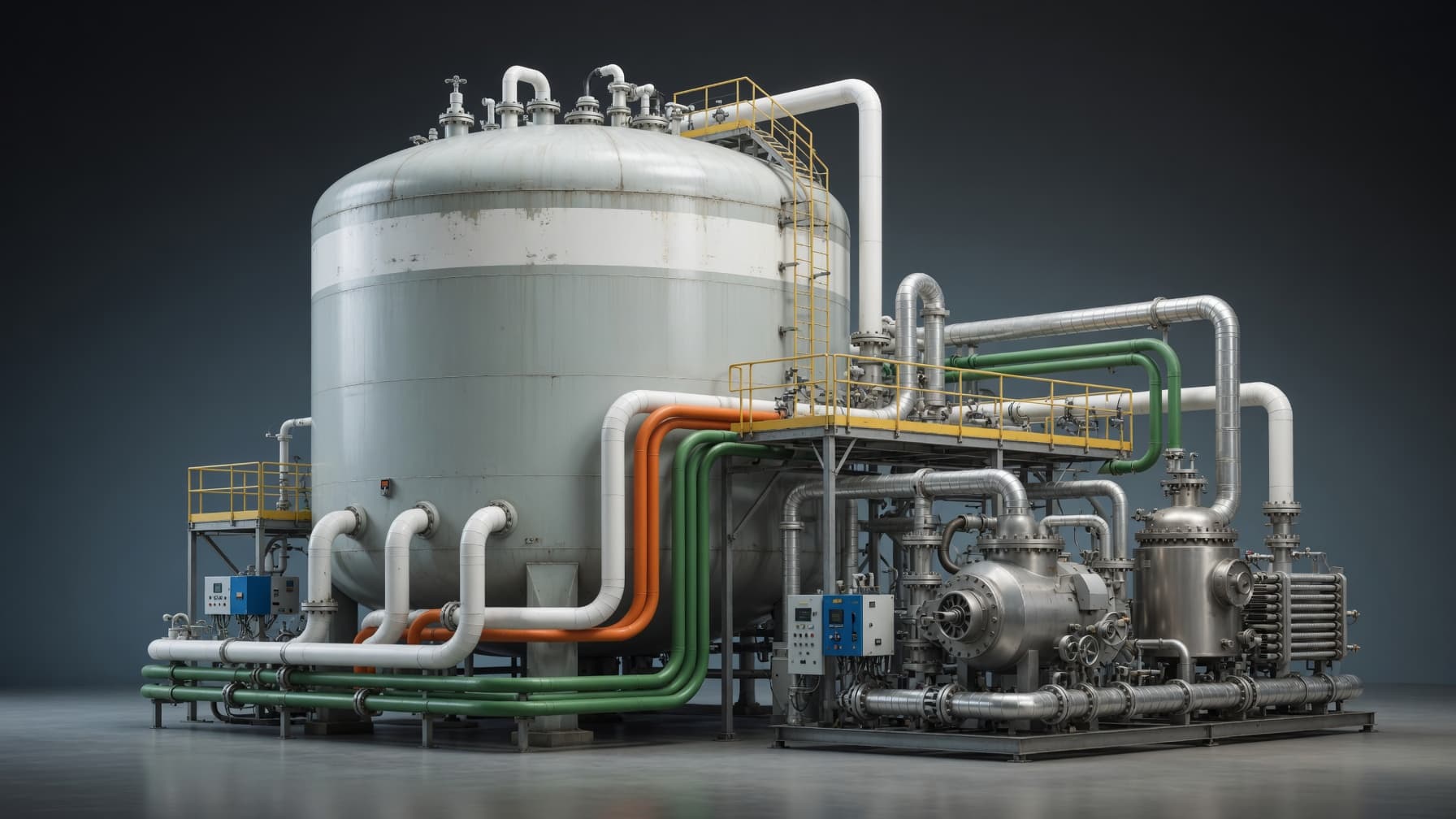
The nylon 6 supply chain faces renewed pressure after LEUNA-Polyamid entered insolvency proceedings, creating uncertainty for European caprolactam production. Buyers should reassess sourcing strategies as specialty chemical capacity remains under pressure.
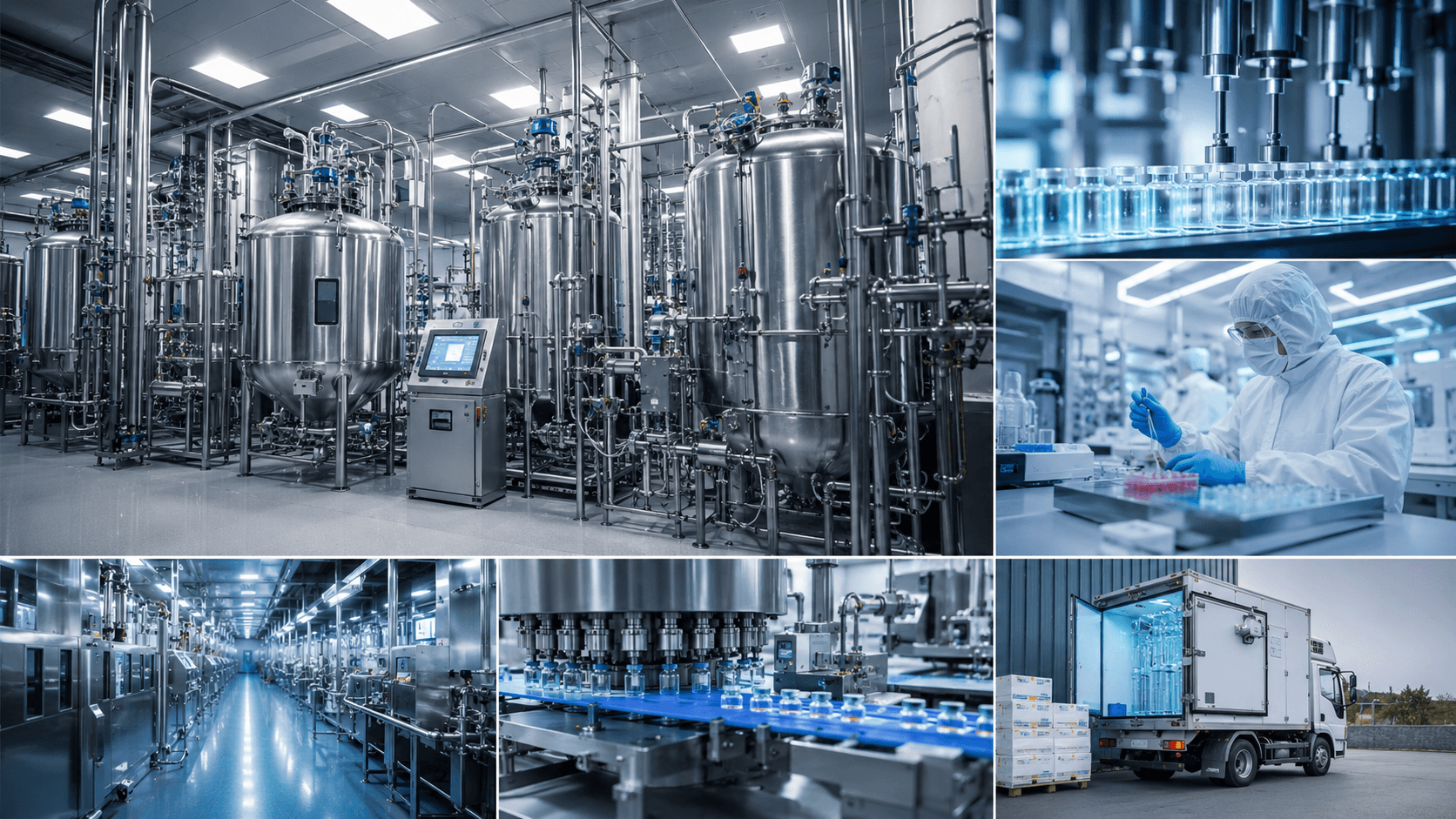
The explosive success of GLP-1 therapies has created one of the most significant pharmaceutical supply chain challenges in modern history. API manufacturers, peptide synthesis facilities and CDMOs are struggling to keep pace as demand for semaglutide and tirzepatide continues to surge globally.
We're committed to your privacy. Tradeasia uses the information you provide to us to contact you about our relevant content, products, and services. For more information, check out our privacy policy.