
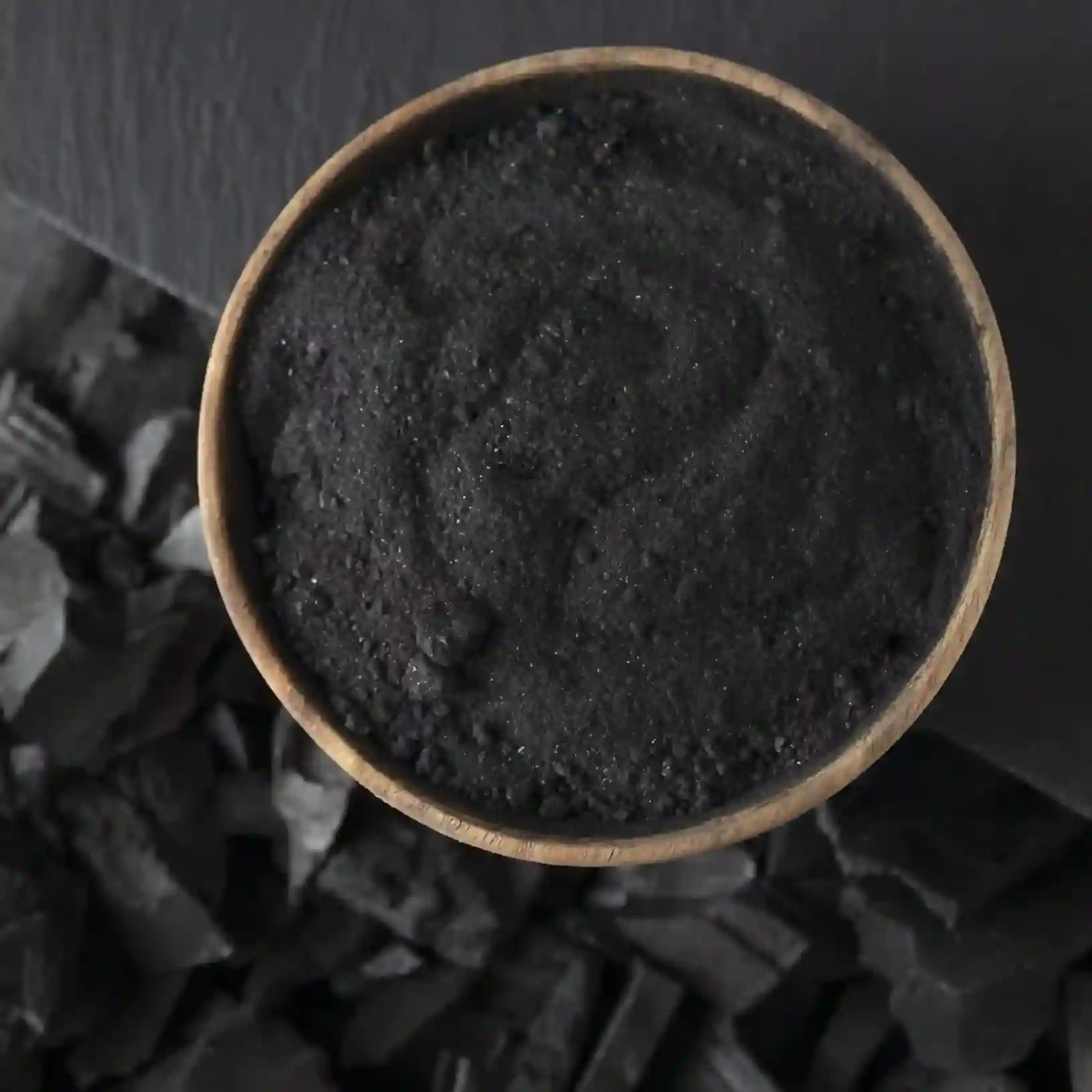
Carbon Black (N550) - India
- IUPAC Name
- carbon
- Molecular Formula
- C
- Molecular Weight (g/mol)
- 12.0100
- Synonyms & Trade Names
- Carbon black; Furnace black; Channel black; N110
- Purity / Assay (%)
- 98% min C
- Grade / Quality Level
- Industrial Grade
Categories
Technical Document
Brief Overview
Carbon black (subtypes are acetylene black, channel black, furnace black, lamp black and thermal black) is a material produced by the incomplete combustion of heavy petroleum products such as FCC tar, coal tar, ethylene cracking tar, and a small amount from vegetable oil. Its physical appearance is that of a black, finely divided pellet or powder. Carbon black consists of more than 96 percent of amorphous carbon and of small quantities of oxygen, hydrogen, nitrogen, and sulfur. Most of these elements are concentrated on the surface. Subsequently oxidized carbon black may contain up to 15 percent of oxygen.
Carbon black can be tailored to the respective intended purposes, hence is characterized by a high diversity that is essentially determined by the method of production and the variation of the process parameters. Carbon black consists of chain-type or botryoidal aggregates that have coalesced during production from smallest, mostly spherical particles. While still in the reactor, these aggregates form large agglomerates. The types of carbon black that have a high specific surface and widely ramified aggregates are particularly conductive. These conductive carbon blacks are used, for example, in antistatic finishings of plastics.
Manufacturing Process
Carbon black is produced with the thermal decomposition method or the partial combustion method using hydrocarbons such as oil or natural gas as raw material. The characteristics of carbon black vary depending on manufacturing process, and therefore carbon black is classified by manufacturing process. Carbon black produced with the furnace process, which is the most commonly used method now, is called “furnace black,” distinguishing it from carbon black, which is manufactured with other processes. This method forms carbon black by blowing petroleum oil or coal oil as raw material (feedstock oil) into high-temperature gases to combust them partially. This method is suitable for mass production due to its high yield and allows wide control over its properties such as particle size or structure. This is currently the most common method used for manufacturing carbon black for various applications ranging from rubber reinforcement to coloring.