

Related Insights
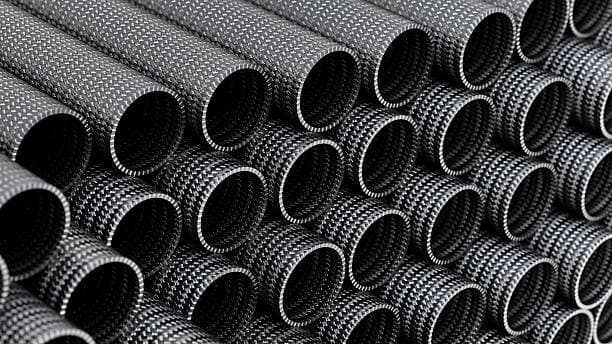
Carbon Fiber Goes Long-Term: Five-Year Supply Commitment Fuels Aerospace & Defense
A five‑year carbon fiber supply agreement provides aerospace and defense firms with unprecedented stability, ensuring consistent material availability, smoother production planning, and stronger supply chain resilience. This long‑term commitment unlocks new opportunities for advanced composites and innovation.
Hormuz Index at 90: Why Supply Chain Risk Remains Elevated Despite Convoy Operations
The recent improvement in convoy operations through the Strait of Hormuz has lowered the Hormuz Index, yet it remains alarmingly high at 90. Supply chain risk is still significant because factors beyond vessel movements—such as geopolitical tensions, port constraints, origination volatility, and cybersecurity threats—continue to loom. Chemical procurement teams must broaden their monitoring scope to stay ahead of these risks.

GLP-1 Peptide Manufacturing: TFA Supply Tightness After Solvay's European Closure
Trifluoroacetic acid has become a strategic procurement priority for GLP-1 peptide manufacturing following Solvay's European production closure. Pharmaceutical buyers should reassess sourcing strategies as Indian CDMO demand accelerates faster than supply growth.
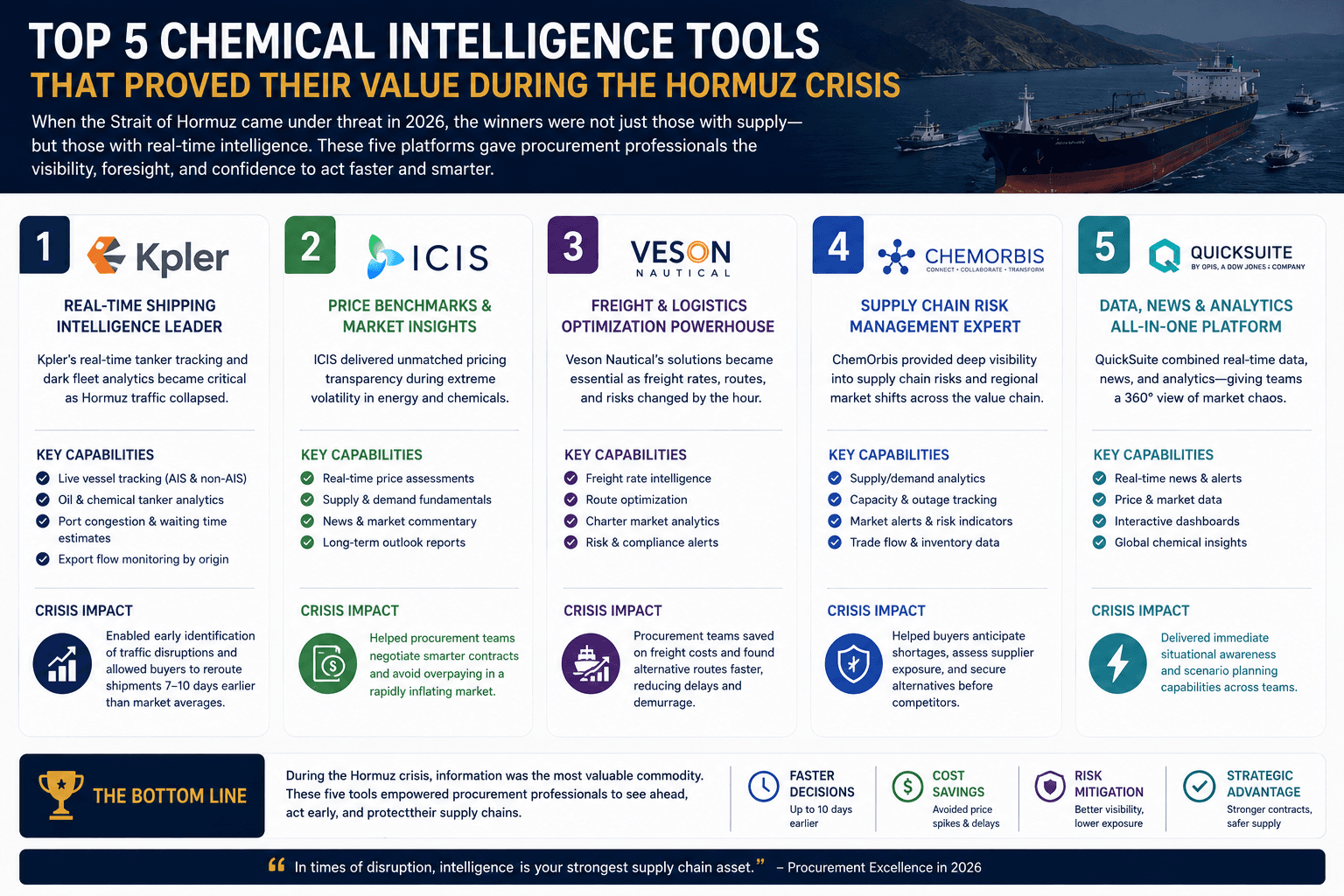
Top 5 Chemical Intelligence Tools That Proved Their Value During the Hormuz Crisis
The 2026 Hormuz crisis proved that traditional procurement systems are no longer enough during global supply chain disruption. Tools like Straits.live, ICIS, Xeneta, Kpler, and IMF PortWatch gave chemical buyers the real-time intelligence needed to make faster and smarter procurement decisions when conventional supplier communication failed.
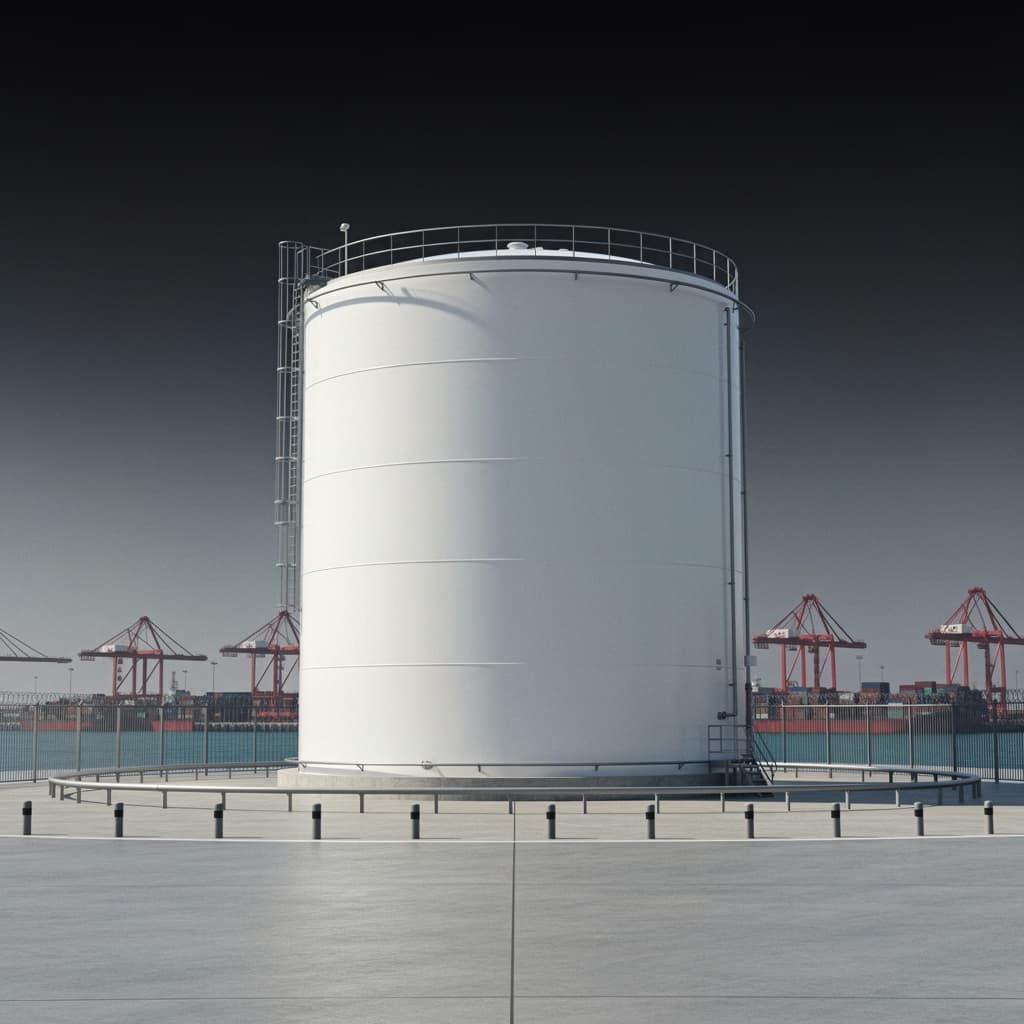
Chemical Procurement Risks After Gulf Ship Attacks: What Buyers Need to Know in 2026
Chemical procurement teams are facing a new supply chain challenge as Gulf shipping risks increase while energy and commodity flows recover. This analysis explains how recent ship attacks could influence chemical sourcing, freight planning and supplier strategies.

Naphtha and Aromatics: Japan's Cracker Restart Decision Point for Q3 2026 Procurement
Japan's steam cracker sector has reached a critical decision point as naphtha supplies improve after months of disruption. Procurement teams, aromatics buyers and petrochemical traders should closely monitor Q3 operating plans because they will shape regional supply, pricing and contract negotiations across Asia.
Don't miss out on our updates! Subscribe to our newsletter now
We're committed to your privacy. Tradeasia uses the information you provide to us to contact you about our relevant content, products, and services. For more information, check out our privacy policy.