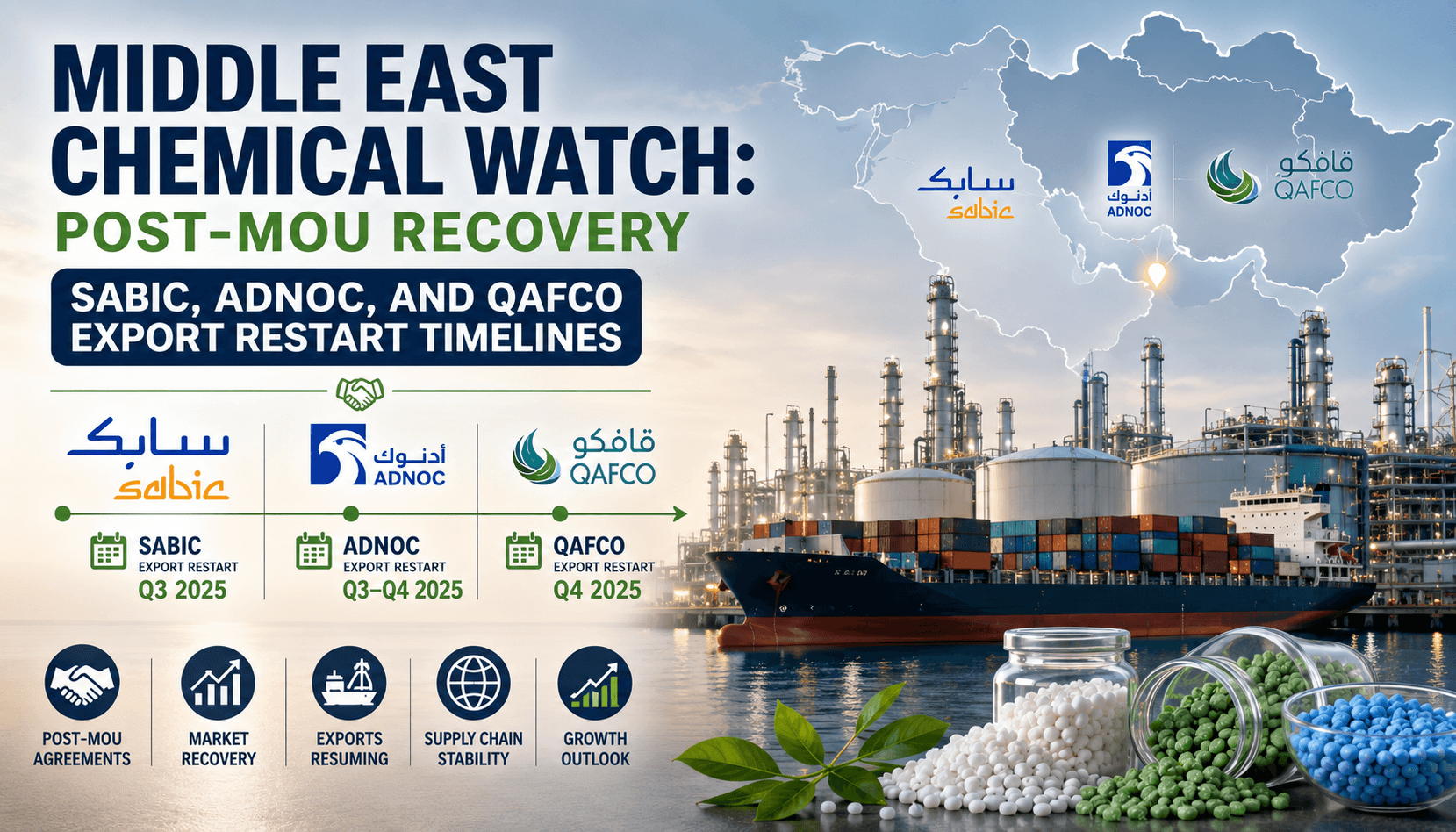
Middle East Chemical Watch: Post-MoU Recovery — SABIC, ADNOC, and QAFCO Export Restart Timelines
Introduction
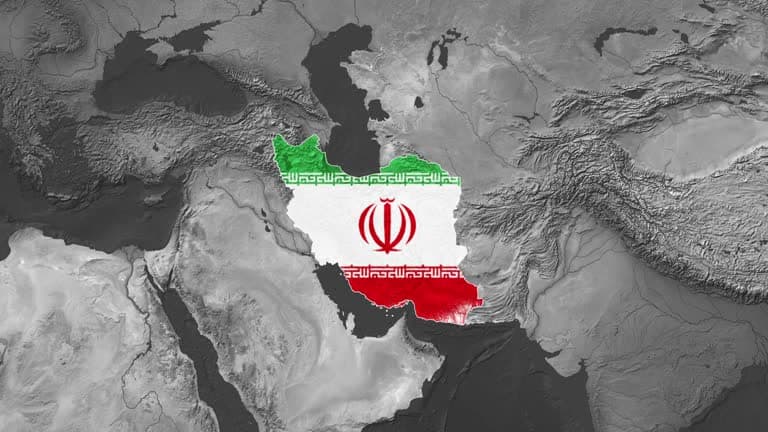
The signing of the June 19, 2026 Hormuz Memorandum of Understanding (MoU) marks the beginning of a new phase for the Middle East chemical industry. While the agreement has reduced immediate geopolitical risk, it does not instantly restore normal trade flows. Production capacity across the Gulf largely remained available during the disruption, but the inability to move products through the Strait of Hormuz severely constrained exports.
As the market enters the second half of 2026, the key question is no longer whether production can resume—it is how quickly exports can normalize. For global buyers who diversified supply chains over the past four months, procurement decisions now depend on balancing returning Gulf volumes against the resilience gained through alternative sourcing strategies.

From Production Crisis to Logistics Recovery
One of the biggest misconceptions during the Hormuz disruption was that Gulf chemical production had collapsed.
In reality:
Many facilities remained operational
Feedstock availability was largely maintained
Storage utilization increased significantly
Export logistics became the primary bottleneck
The challenge was not manufacturing chemicals—it was delivering them to international customers.
As a result, the recovery phase is expected to be driven by shipping and logistics timelines rather than production restarts.
Ammonium Bromide CAS: 12124-97-9
Urea (Granular) - Egypt CAS: 57-13-6
SABIC: Capacity Available, Export Recovery Pending
SABIC entered the crisis with one of the world's most diversified petrochemical portfolios.
Key product chains:
Ethylene and polyethylene
Polypropylene
Glycols
Engineering plastics
Fertilizer intermediates
Current situation:
Production assets largely remain operational
Inventory management has been a major focus
Export recovery depends on shipping lane normalization
Buyer implication:
SABIC customers should expect gradual increases in export availability rather than an immediate surge of volumes.
Some long-term contract holders may receive priority allocations before spot market liquidity fully returns.
ADNOC: Leveraging UAE Infrastructure
ADNOC remains one of the most strategically important producers in the Gulf region.
Key strengths:
Integrated upstream and downstream operations
Strong export infrastructure
Significant petrochemical investment programs
Recovery outlook:
Although production capacity remains available, export normalization depends heavily on maritime security conditions.
Industry participants expect:
Gradual increase in shipment frequency
Continued logistics premiums through late 2026
Selective prioritization of strategic export markets
The UAE's chemical sector is likely to recover faster than many expected, but not fast enough to restore pre-crisis trade patterns immediately.
QAFCO: Fertilizer Markets Watching Closely
Qatar Fertiliser Company (QAFCO) has become a focal point for global fertilizer buyers.
Core exports:
Ammonia
Urea
Nitrogen fertilizer products
Current status:
Export terminals are preparing for phased restart programs.
Likely sequence:
Existing contractual commitments fulfilled
Strategic agricultural markets prioritized
Spot market availability gradually expands
Fertilizer buyers in Asia, Africa, and Latin America are closely monitoring QAFCO's restart pace because replacement supply has been sourced at significantly higher costs since March.

The Mine Clearance Challenge
Despite the MoU, one critical obstacle remains unresolved:
Strait of Hormuz navigation security
Mine clearance and maritime safety verification continue to influence shipping decisions.
Why it matters:
Insurance costs remain elevated
Vessel operators remain cautious
Freight rates have not returned to pre-crisis levels
Shipping schedules remain irregular
Several regional officials have indicated that full normalization may extend well into 2027.
This means the market should expect a recovery process rather than a recovery event.
Global Chemical Trade Has Changed
The disruption forced buyers worldwide to diversify sourcing.
Alternative suppliers benefited significantly:
China
Increased exports of PTA
Higher methanol and derivative shipments
Expanded soda ash and citric acid exports
India
Greater regional supply role in selected chemicals
Increased export inquiries
Southeast Asia
Expanded participation in selected petrochemical chains
For many buyers, these emergency sourcing arrangements have now become established commercial relationships.
Should Buyers Return to Gulf-Centric Procurement?
This is the most important strategic question facing procurement teams.
Option 1: Return to Gulf-Centric Sourcing
Advantages:
Historically competitive pricing
Large-scale production
Reliable long-term supply base
Strong feedstock economics
Risks:
Continued geopolitical exposure
Shipping normalization uncertainty
Potential future concentration risk
Option 2: Maintain Multi-Origin Sourcing
Advantages:
Reduced supply disruption risk
Greater flexibility
Improved resilience
Risks:
Higher procurement complexity
Potentially higher average costs
More supplier management requirements
Why a Hybrid Strategy Makes Sense
For most chemical buyers, the optimal solution is neither a full return to Gulf dependence nor permanent avoidance of Middle Eastern suppliers.
Recommended approach:
Maintain:
Core Gulf contracts for cost competitiveness
Secondary suppliers in China, India, or ASEAN
Strategic inventory buffers for critical materials
This structure combines:
Cost efficiency
Supply security
Geographic diversification
The events of 2026 have demonstrated the value of redundancy in chemical procurement.
Product Chains Most Likely to Normalize First
Faster recovery candidates:
Commodity polymers
Methanol derivatives
Basic petrochemicals
Slower recovery candidates:
Ammonia
Urea
Export-intensive specialty products
Products requiring dedicated shipping arrangements
Availability will likely improve unevenly across product categories.
Market Outlook
The June 19 Hormuz MoU marks the beginning of recovery, not the end of disruption. Middle Eastern producers including SABIC, ADNOC, and Qatar Fertiliser Company (QAFCO) have substantial production capacity available, but logistics normalization remains the critical variable.
For global buyers, the most important lesson from 2026 is that supply security cannot rely on a single region. As Gulf exports gradually recover, procurement teams are increasingly adopting hybrid sourcing models that preserve the cost advantages of Middle Eastern chemicals while retaining the resilience of diversified supply chains.
Key Takeaways
The June 19 Hormuz MoU begins the recovery process but does not immediately restore normal exports.
Production capacity at SABIC, ADNOC, and QAFCO largely remained available during the disruption.
Shipping and logistics remain the primary bottlenecks.
Mine clearance and maritime security continue to delay full normalization.
Gulf export recovery is expected to be gradual through late 2026 and potentially into 2027.
Many buyers have established alternative sourcing relationships in China, India, and ASEAN.
A hybrid sourcing strategy offers the best balance of cost and resilience.
Supply chain diversification is likely to remain a permanent feature of post-crisis procurement.