


Related Insights

Rupee Volatility Is Becoming a Critical Compliance Factor in Cross-Border Chemical Contracts
Continued depreciation of the rupee is increasing financial and contractual risks for chemical importers and exporters. Compliance and procurement professionals should strengthen currency risk management as exchange rate volatility becomes a larger component of international contract performance.
Naphtha Supply Halted: How Asia's Petrochemical Makers Are Responding to Hormuz Disruptions
The disruption of naphtha shipments through the Strait of Hormuz has placed renewed pressure on Asia's petrochemical industry. Buyers of olefins, polymers and downstream petrochemicals should reassess feedstock exposure and supplier resilience as market conditions evolve.
Iran’s “Service Fees”: What Toll-Based Passage Would Cost the Chemical Industry Annually
Iran’s proposal to charge “service fees” for Hormuz passage could permanently reshape the economics of global chemical trade. If transit charges become permanent, Gulf-origin chemical supply chains may face $500 million to $1.5 billion in additional annual costs that buyers will ultimately absorb through higher contract pricing.
China Chemical Exports 2026: Urea Caps, MTO Surge, and July Pricing Pulse
China’s urea export limits and aggressive methanol-to-olefins (MTO) rates set the stage for 2026 chemical flows. July pricing decisions will reveal whether China will defend its crisis‑era share or recalibrate toward market balance. Global buyers must watch China’s export strategy closely.
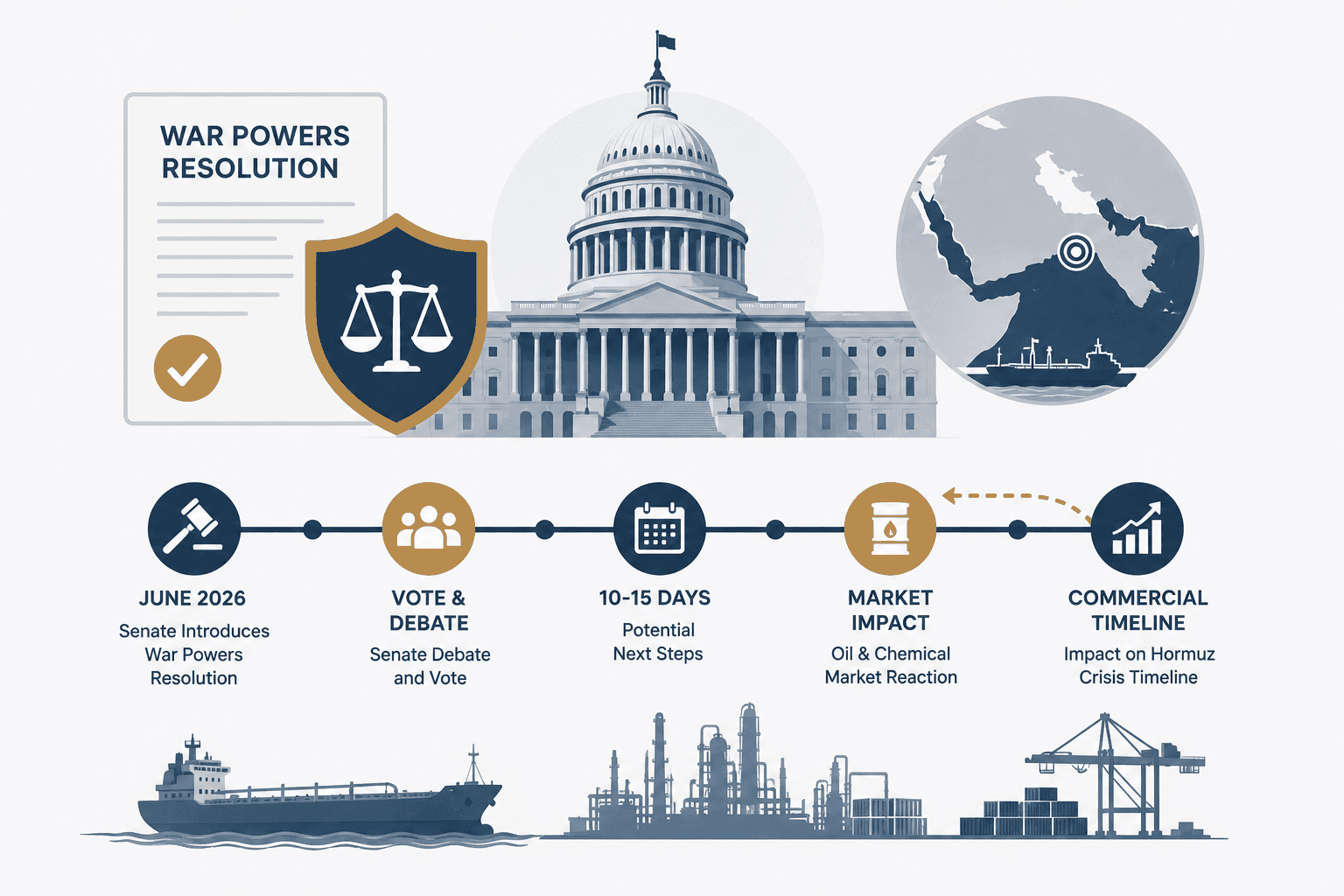
US Senate War Powers Resolution: What It Means for the Hormuz Crisis Commercial Timeline
The US Senate’s war powers resolution against Trump’s Iran conflict strategy may accelerate diplomatic pressure around the Hormuz crisis. For chemical markets, faster political de-escalation could mean quicker supply chain recovery and a more positive H2 2026 outlook.
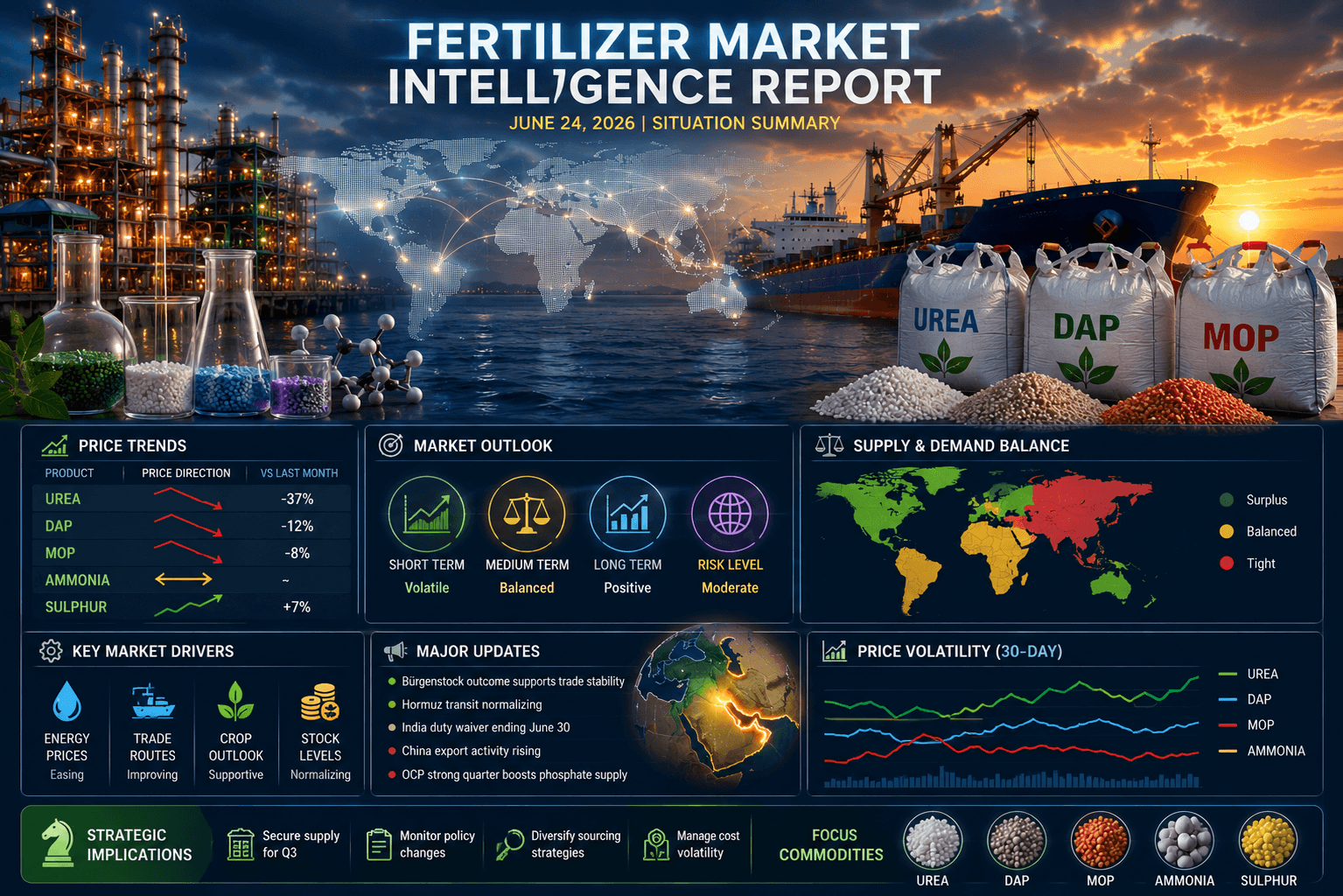
Fertilizer Market Intelligence Report: June 24, 2026 Situation Summary
Global fertilizer markets are stabilizing after months of disruption, but June 2026 remains a critical procurement window. Urea prices are down 36%, ammonia exports may restart in July, and fertilizer buyers must navigate supply recovery, policy deadlines, and pricing uncertainty.
Don't miss out on our updates! Subscribe to our newsletter now
We're committed to your privacy. Tradeasia uses the information you provide to us to contact you about our relevant content, products, and services. For more information, check out our privacy policy.